

The story of the dollar is inseparable from the grand narrative of modern finance, a tale that has been captured and dissected through countless financial documentaries and films. These visual explorations offer not only an understanding of American currency but also a window into the broader world of financial services, wealth management, and the intricate mechanisms that govern global economics. From its humble origins to its current status as a dominant force in international trade, the dollar's evolution reflects the shifting tides of economic history and the persistent influence of central banking institutions such as the Federal Reserve.
- The adoption of the dollar in the late 18th century provided the United States with essential economic stability and established its national sovereignty.
- The Bretton Woods Agreement and the post-World War II era solidified the dollar's position as the primary global reserve currency.
- Financial documentaries and films serve as key educational tools for understanding the complex history and global influence of the U.S. dollar.
- The Federal Reserve and central banking institutions play a critical role in managing monetary policy, which directly impacts the dollar's international valuation.
- Physical banknotes and coins remain a vital component of the economy, designed with rigorous security features to ensure trust and prevent counterfeiting.
- Commercial banks act as the essential infrastructure for distributing cash and facilitating the transition between physical currency and digital financial transactions.
The Historical Evolution of the Dollar: From Colonial Times to Global Reserve Currency
The Birth of American Currency in the Late 18th Century
The introduction of the dollar in the late eighteenth century marked a defining moment in American economic history. Before the establishment of a unified currency, the fledgling United States relied on a chaotic mixture of foreign coins and colonial-issued notes, which created instability and confusion in trade. The adoption of the dollar as the official monetary unit provided a foundation for economic stability and symbolised the new nation's sovereignty. This pivotal decision was not merely administrative; it represented a commitment to creating a financial system that could support commerce and foster confidence among domestic and international traders. The early years of the dollar were marked by experimentation and adaptation, as the young republic sought to balance the need for a stable currency with the realities of limited infrastructure and evolving banking systems. Understanding this formative period is essential to appreciating how the dollar later emerged as a pillar of global finance, a transformation that documentaries such as The Ascent of Money have explored in depth by tracing the history of finance across six compelling episodes.
The Dollar's Journey to International Prominence in the 20th Century
The twentieth century witnessed the dollar's ascent from a national currency to a global reserve standard, a process shaped by economic upheaval, strategic policy decisions, and the establishment of influential institutions like the IMF and World Bank. The aftermath of the Second World War saw the Bretton Woods Agreement cement the dollar's central role in international finance, as nations pegged their currencies to the American unit in an effort to create stability and facilitate post-war reconstruction. This arrangement endured for decades, reinforcing the dollar's dominance and embedding it deeply within the fabric of global trade. The subsequent shift to floating exchange rates did little to diminish its influence; instead, the dollar adapted and maintained its relevance through the backing of a robust economy and the trust of central banks worldwide. Films such as The Commanding Heights have examined this era of global economic development across three detailed episodes spanning six hours, offering viewers insight into the forces that propelled free markets and the dollar's enduring significance. The relationship between monetary policy and international finance became ever more intricate, with central banking decisions and interest rates playing critical roles in determining the dollar's valuation and its impact on global currency relations.
The Physical and Digital Forms of the Dollar in Modern Circulation
Banknotes and Coins: The Tangible Representation of American Currency
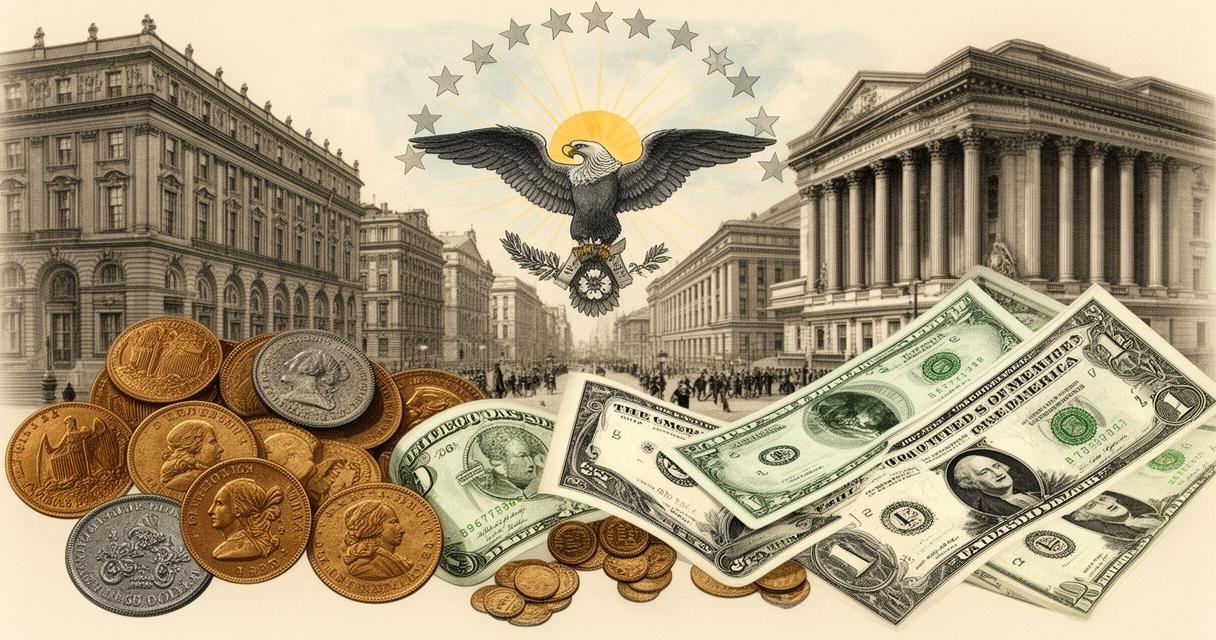
Dollars circulate in various tangible forms, including bills and coins that serve as the everyday currency for millions of people. Each banknote and coin is meticulously designed to incorporate security features that prevent counterfeiting while also conveying elements of American heritage and identity. The physical nature of currency remains vital despite the rise of digital transactions, as cash continues to be a trusted medium for smaller purchases and regions where electronic payment infrastructure is less developed. Banks play an essential role in distributing these physical units, ensuring that sufficient quantities are available to meet demand while managing the logistics of collecting, authenticating, and redistributing worn or damaged notes. The process of maintaining a healthy circulation of banknotes and coins involves collaboration between the Federal Reserve, commercial banking institutions, and government minting facilities. This tangible aspect of currency is part of a broader narrative that documentaries such as Money for Nothing: Inside the Federal Reserve have explored, shedding light on the inner workings of the institution responsible for overseeing monetary policy and safeguarding economic stability. The meticulous attention to design and security reflects not only the practical needs of commerce but also the symbolic weight that physical money carries in representing national economic strength.
The Role of Banks in Distributing and Managing Dollar Circulation
Banks serve as the backbone of dollar circulation, acting as intermediaries that facilitate the flow of currency between the Federal Reserve and the public. Commercial banks are responsible for ordering cash supplies from central repositories, dispensing funds through ATMs, and accepting deposits that re-enter the financial system. This continuous cycle of distribution and collection ensures that the monetary unit remains readily accessible while also allowing for the monitoring of currency health and the detection of counterfeit notes. Beyond physical circulation, banks have embraced digital platforms that complement traditional cash management, offering customers the ability to conduct transactions electronically while maintaining the liquidity necessary to convert digital balances into tangible currency when needed. The interplay between physical and digital forms of money illustrates the evolving nature of financial services, where investment planning and wealth management increasingly rely on sophisticated technology to optimise asset allocation and mitigate risk. This dynamic environment has been the subject of numerous finance documentaries that aim to enhance financial literacy and demystify the operations of banking systems. Films such as 97% Owned delve into the origins of money and the mechanisms of central banking, providing audiences with a clearer understanding of how currency is created, distributed, and regulated in a modern economy. The role of banks extends beyond mere distribution; they are integral to shaping economic behaviour and influencing the broader patterns of trade and investment that define global economics.
The Dollar's Influence on Global Financial Markets and Currency Relations
The Dollar-Euro Dynamic and Its Impact on International Trade
The relationship between the dollar and the euro represents one of the most significant currency pairings in international finance, influencing trade balances, investment flows, and economic policy across continents. As two of the world's most widely used currencies, the dollar and euro are constantly evaluated against one another by traders, central banks, and multinational corporations seeking to optimise their financial strategies. Fluctuations in the dollar-euro exchange rate can have profound implications for exporters and importers, as changes in relative value affect the competitiveness of goods and services in foreign markets. A stronger dollar may benefit American consumers purchasing European products but can pose challenges for American exporters competing abroad, while a weaker dollar can stimulate exports but increase the cost of imported goods. This delicate balance is closely monitored by policymakers who must navigate the complexities of monetary policy to maintain economic stability without triggering unintended consequences. Documentaries such as The Warning have highlighted how pre-2008 financial crash warnings underscored the vulnerabilities inherent in global financial systems, including the risks associated with currency misalignments and speculative trading. The dollar-euro dynamic exemplifies the interconnectedness of modern economies, where decisions made in one financial centre reverberate across borders and influence the fortunes of businesses and consumers alike. Understanding this relationship is crucial for anyone engaged in investment planning or seeking to grasp the broader implications of monetary policy on wealth management and financial services.
Central Bank Interest Rates and Their Effect on Dollar Valuation
Central bank interest rates are among the most powerful tools available for influencing the value of the dollar and shaping economic conditions domestically and internationally. When the Federal Reserve adjusts its benchmark interest rate, it sends signals to financial markets that can lead to shifts in currency valuation, investment behaviour, and borrowing costs. Higher interest rates typically attract foreign capital seeking better returns, which can strengthen the dollar as demand for the currency increases. Conversely, lower interest rates may encourage borrowing and spending but can lead to a depreciation of the dollar as investors seek higher yields elsewhere. The ripple effects of these adjustments extend beyond national borders, impacting global trade dynamics and the relative competitiveness of American exports. Central banking institutions around the world closely coordinate their policies to manage these effects and mitigate the risks of financial instability. The 2008 financial crash, explored in films such as The Last Days of Lehman Brothers, demonstrated how interconnected financial systems can amplify the consequences of policy missteps and market failures, underscoring the importance of prudent monetary policy and effective regulation. The role of the Federal Reserve in setting interest rates is not merely technical; it is a reflection of broader economic philosophy and the ongoing debate over the balance between free markets and government intervention. Documentaries like Freakonomics: The Movie have examined human behaviour through the lens of economic incentives, revealing how policy decisions influence individual choices and aggregate outcomes. The effect of interest rates on dollar valuation is a vivid illustration of the complex interplay between central banking, financial markets, and the real economy, a subject that continues to captivate audiences seeking to deepen their understanding of finance and economic history. The dollar remains one of the most widely used currencies in the world, symbolising economic stability and reflecting the enduring legacy of American financial leadership in an era defined by rapid change and globalisation.